
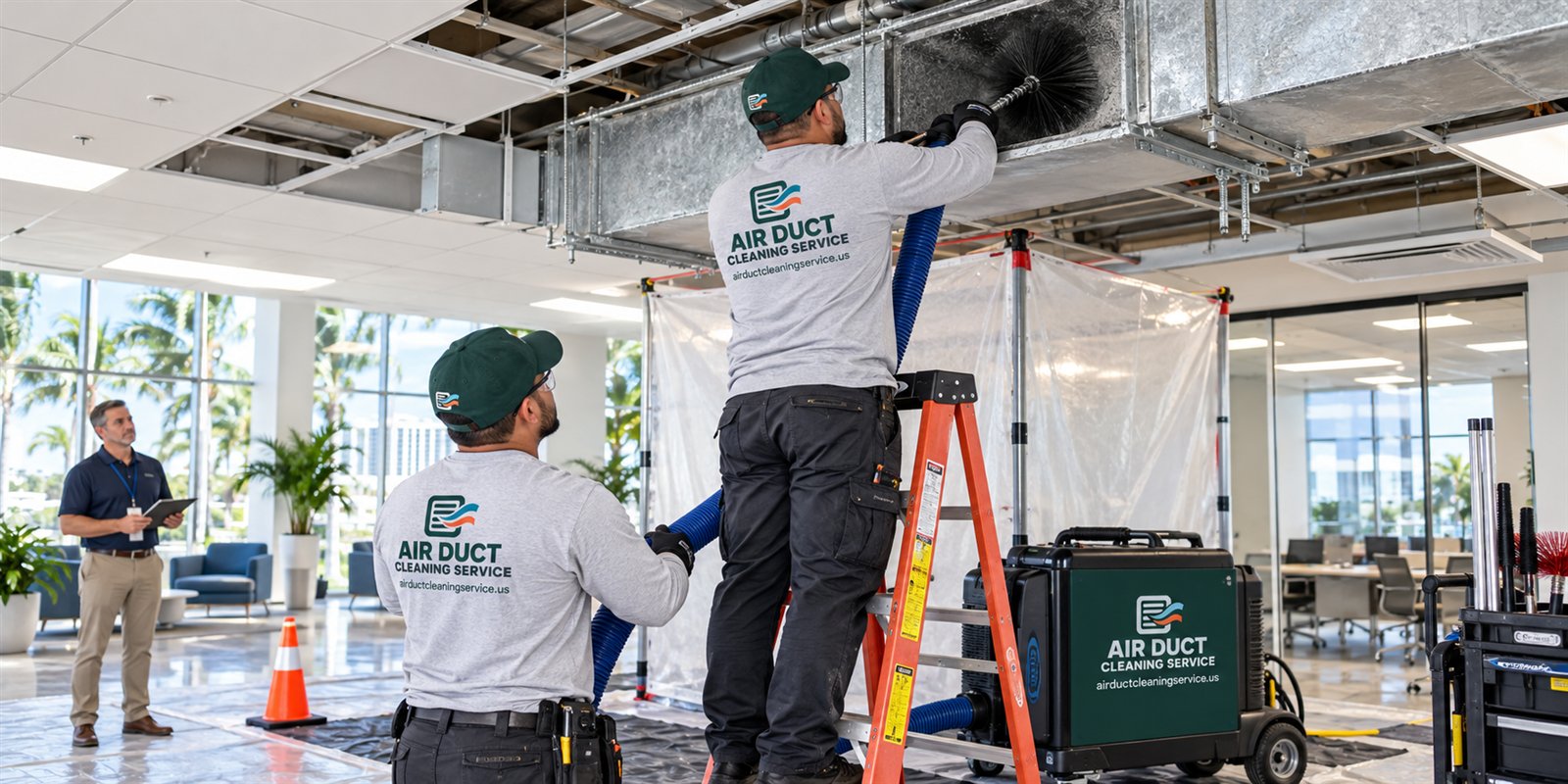
Why commercial ductwork is a different job
A house usually has one air handler and a handful of branches. A commercial building can have several air handlers, rooftop packaged units, large trunk lines above a ceiling grid, return plenums that are simply the open space above the tiles, and exhaust systems serving restrooms, kitchens or storage rooms. The cleaning method may be similar in principle, but the scale, the access and the consequences of a mistake are all bigger.
In many South Florida strip centers, small offices and medical suites, the ductwork is a mix of insulated flexible duct and rectangular sheet metal. Older buildings may have lined metal duct whose inner insulation needs careful handling. Restaurants add grease-laden exhaust, which is a separate trade and not what a normal supply and return cleaning addresses.
Because of this variety, commercial work almost always starts with a conversation and a look at the building, not a fixed package. The provider needs to know how many systems there are, where they sit, who controls access and when the space can be worked in. That is why larger commercial jobs usually need an on-site visit before a quote can be given by phone.

Setting the scope before anyone touches a duct
Scope is the single most important thing to agree on. Does the job include every supply and return duct in the building, or only the systems serving particular suites? Does it include the air handlers and coils, or only the ductwork? Does it cover the rooftop unit curb and the first section of duct below it? Are ceiling return plenums included, or only ducted returns?
A written scope protects both sides. It lists which systems are covered, how access will be gained, which areas will be photographed before and after, and what happens if something unexpected is found, such as wet insulation above a ceiling or a damaged duct section. Without a written scope, a job described as a full cleaning can mean very different things to the owner and to the crew.
A property manager managing several suites should also decide whether the building is cleaned as one project or suite by suite as leases turn over. Each approach has trade-offs. A single project is efficient but disruptive. A suite-by-suite approach is gentler on tenants but needs tracking so that no system is forgotten. The page on the property manager duct program discusses the planning side.
- List of air handlers and rooftop units with their locations
- Which suites each system serves
- Duct materials and any lined or insulated sections
- Access points: roof hatch, ceiling tiles, mechanical rooms
- Whether exhaust ducts are part of the job
- Photographs required before and after
Access: ceilings, roofs and mechanical rooms
Access shapes the schedule more than almost anything else. In an office with a drop ceiling, technicians lift tiles to reach duct runs, which means moving things below, protecting desks and carpet and putting the tiles back without damage. In a retail unit with an open ceiling, duct may be visible and reachable from a lift. Rooftop units need roof access, which involves the building owner, safety rules and good weather.
Mechanical rooms and closets can be tight. Air handlers installed against walls leave very little room to remove panels, so the technician may have to disconnect and move components or work through small openings. This is when it matters that the provider looked at the site before quoting, because surprises in access turn into delays and disagreements.
Building rules also matter. Some managed properties require insurance certificates, work orders, elevator reservations and notice to tenants. A reliable provider asks about these requirements up front. If you manage the building, collect them before you call so the conversation is efficient. The page on verifying credentials and insurance explains what to ask a provider to show you.
After-hours and phased scheduling
Many commercial duct jobs are done outside business hours so that tenants and customers are not exposed to equipment noise or loosened dust. Evening, overnight and weekend work are all possible in principle, but availability depends on the provider and the building, and no one can promise a particular hour. Treat any scheduling talk as an arrangement made on the phone, not an assumption.
Phasing is the other tool. Instead of shutting down a whole building, work can move zone by zone, with each air handler switched off only while it is being cleaned. Tenants served by other systems carry on normally. This takes more planning but reduces disruption for a busy dental office, a shared workspace or a store with long hours.
For restaurants and shops with customers coming and going, the plan may include blocking off work areas, using barriers near registers and cleaning supply and return openings near seating last. For medical and childcare spaces, there may be extra rules, which are discussed on the pages about medical and office buildings and restaurants and retail.
What the inspection finds in a commercial building
Commercial systems fail to stay clean for reasons that differ from homes. Filters are often undersized or left in too long, so dust loads the coil and the supply side. Returns drawn from a dusty ceiling plenum carry insulation fibers, drywall dust and debris from past construction. Frequent door openings pull humid outdoor air into spaces, so coils and drain pans stay wet.
An evidence-first inspection photographs representative locations: inside a main trunk, at several diffusers, at the air handler's blower and coil, and in any return plenum space. The technician looks for visible debris layers, damp insulation, rust on the pan or casing, and evidence of past water problems. Where something looks like mold, it is documented and discussed, not declared. The page on visible mold versus dust explains why careful wording matters.
The inspection result decides how much cleaning is needed. A building with tidy systems and a good filter routine may need only targeted work. A building after a renovation, a long vacancy or a water event may need much more. Neither result should be assumed in advance.
Methods and containment in occupied space
The core method is the same one used in homes: negative pressure to draw loosened debris to a filtered collection unit, with agitation tools that match the duct material. In a commercial building the collection unit may be large and run from a van, a trailer or a unit positioned in a mechanical space. Ductwork is typically cleaned section by section, and openings are made where the duct allows.
Containment protects people and property. Plastic sheeting and barriers keep dust from drifting where tiles are lifted. Floor protection is laid where equipment moves. Registers are covered as sections are cleaned. Workers use personal protective equipment, and clients should keep people away from active work zones.
Fiberglass-lined duct needs particular care, because over-aggressive agitation can damage the lining. A provider who knows the building's duct types and has photos of them can pick the right tools. The guide on lined ductwork and liners explains what is at stake and why some lined runs are better inspected than scrubbed.
Documentation a building manager can use
Commercial clients often need records for a lease file, an insurance conversation or a maintenance log. Good documentation includes a list of systems serviced, dated before and after photographs for each, notes on conditions that could not be addressed, and any recommendations such as filter changes, drain line cleaning or duct repair.
Ask in advance what the report will contain and what format it will arrive in. If you need photos labeled by suite or equipment tag, say so when scheduling, so the technician captures them that way rather than leaving you to sort a pile afterward. This is also where a written scope pays off, because the report can be checked against it line by line.
Keep these reports with your other building records. If a tenant complains about odors or dust later, an organized history of what was inspected and when helps you separate a duct issue from a problem with cleaning schedules, filters or ventilation. The page on keeping your own duct records suggests a simple structure.
Filters, coils and drain pans: the maintenance side
Duct cleaning works best alongside a routine that keeps the system from re-soiling. In commercial buildings that routine usually belongs to an HVAC maintenance contractor, a building engineer or the property manager. A cleaning visit does not replace it. If filters are the wrong size, left in place until they collapse, or bypassed by gaps around the frame, dust goes straight to the coil and the supply side no matter how recently the ducts were cleaned.
Coils and drain pans deserve the same attention. A cooling coil in a humid climate is wet most of the time the system runs. If the drain line backs up, the pan holds water, and slime and odors follow. A technician who opens the air handler during a cleaning visit can tell you what the pan looks like and whether the drain seems clear, which is useful information to hand to whoever maintains the equipment.
For this reason, a sensible commercial plan separates three questions. What is the condition of the ducts? What is the condition of the air handler, coil and pan? And what routine keeps both from slipping again? The first two are answered by inspection. The third is answered by your maintenance arrangements, which a provider can comment on but should not claim to control.
- Confirm filter size, rating and replacement routine for each air handler
- Ask whoever maintains the equipment about drain line checks
- Note any air handler with rust, standing water or visible slime
- Keep a log of which systems were inspected and cleaned, and when
- Report tenant complaints against the system that serves their space
Common commercial situations in South Florida
Strip center tenants often share a roof and a landlord but have their own rooftop units. When one tenant calls about musty smells, the landlord needs to know whether the unit, its drain line or the ductwork is responsible, and an inspection answers that faster than guessing.
Small offices in converted buildings may have undersized returns that pull dust and humid air from the ceiling cavity. A property after a storm may have water-stained tiles and insulation, which should be evaluated before any cleaning begins. A shop with a long vacancy may have debris, pests or stagnant coil water. A new tenant finishing out a space may leave construction dust inside duct runs left uncovered, a case discussed on the page for post-construction duct cleaning.
Restaurants need to be careful about what the word duct means. Supply and return ductwork can be cleaned like any other building system. Kitchen exhaust hoods and grease ducts are governed by different fire-safety practices and are not the same service. Be clear about which one you are asking for when you call.
What to have ready when you call
A productive call starts with a few facts. How many square feet is the space, and how many systems serve it? Is it a single suite or the whole building? Are the units on the roof, in closets or above the ceiling? What is the building used for, and what hours does it operate? Are there rules about access, insurance or scheduling?
Photos help. A picture of the air handler, a diffuser, the filter and any stained ceiling tile can save time. If you have an earlier cleaning report, mention it. If tenants have complained about dust, smells or comfort, describe what they said and where in the building it happens.
Remember that quotes come by phone, and that a larger or more complicated building will usually need an on-site visit first. There is a service call charge, explained on the phone before dispatch. Then call, describe the building and let the conversation lead to the right next step. Reading the page on the commercial duct FAQ beforehand will make the call even more useful.
Questions people ask
Can commercial duct cleaning be done after business hours?
Often, yes, and many building managers prefer it. Availability depends on the provider and the building rules, and no one can promise a specific hour. Discuss your preferred schedule on the phone, along with any access requirements such as roof hatches, elevators or after-hours security procedures at your property.
Is kitchen exhaust cleaning the same as duct cleaning?
No. Supply and return ductwork carry conditioned air. Kitchen hoods and grease exhaust ducts carry cooking vapors and are cleaned under fire-safety practices that differ. When you call, say clearly which one you need so that the right service is planned and no one assumes the other is included.
Does a commercial job need an on-site visit first?
Usually yes for anything larger or more complicated, such as several air handlers, ceiling plenums or rooftop units. A visit lets the provider see access, duct types and conditions, and then give an accurate quote by phone. There is a service call charge, which is explained before anyone is dispatched.
What records should I expect afterward?
At minimum, a list of systems serviced, dated before and after photos, notes on anything that could not be reached and any recommendations. Ask for the format you need, such as photos labeled by suite or equipment tag, so the report fits your building files and lease records.
Will tenants be exposed to dust during the work?
Careful containment keeps dust out of occupied areas. That means negative pressure collection, barriers where ceiling tiles are lifted, covered registers and phased work by zone. Tenants should still stay away from active work areas, and sensitive spaces may need extra planning before the job begins.
How do I know if the building needs cleaning at all?
An inspection answers that. Photograph representative ducts, air handlers, coils and diffusers, then look for debris layers, damp insulation and drain problems. If the systems look tidy and filters are kept up, cleaning may not be needed yet. Call and describe what you see so the right next step can be chosen.
Describe the situation by phone and we will tell you what the job involves. Quotes are given by phone. Jobs that cannot be quoted without seeing them need a technician on site, and the service call charge is explained on the phone before anyone is dispatched.
Related pages
- Home Duct lleaning: Step by step, what a whole-house duct cleaning visit includes for single-family homes in South Florida, from inspection and photos to the final check.
- Air Handler Cleaning: The air handler cabinet, drain pan area and filter slot as a distinct job from the ductwork itself, and what a careful cabinet cleaning includes.
- Commercial FAQ: Answers for business owners and managers on duct work in commercial spaces: scheduling around operations, downtime, access, documentation and scope.
- Property Managers: A practical guide for property managers: how to plan duct inspections across many units, keep records, schedule visits and give tenants clear notice.
- Condo Duct Cleaning: Closet air handlers, short runs, building rules and association access: how duct cleaning works inside a South Florida condo or apartment unit.
- Dryer Vent Cleaning: Why long vent runs and rooftop terminations in Florida homes collect lint, what clearing a dryer exhaust involves, and the warning signs worth acting on.