
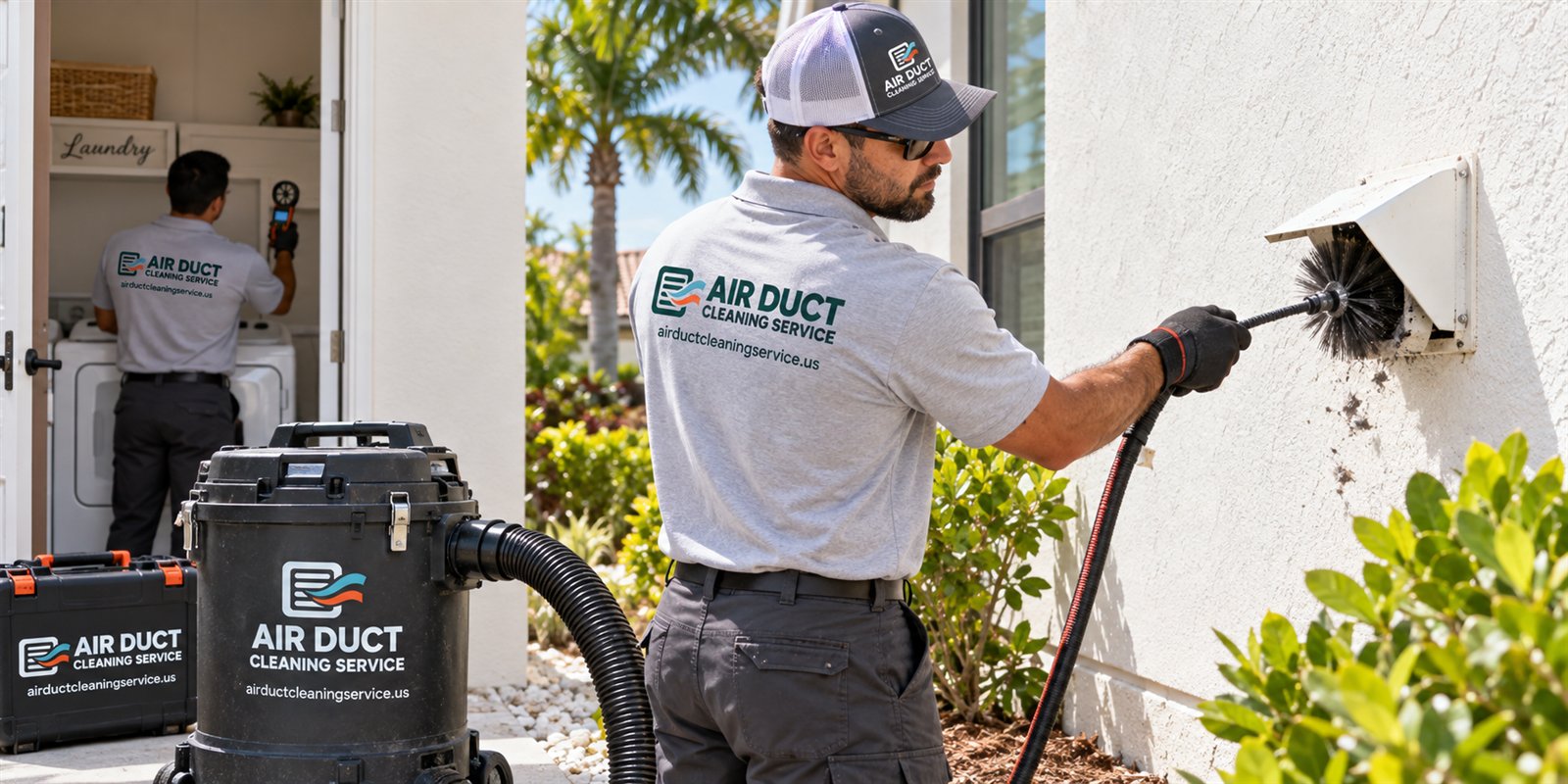
What a dryer vent run is and why it clogs
Every dryer needs a path for hot, moist air to leave the home. That path, called the exhaust run, starts at the back of the dryer, passes through a wall, floor or ceiling, and ends at a termination on an exterior wall or roof. The lint trap inside the dryer catches most fibers, but some always pass through. Over months, those fibers coat the inside of the pipe, particularly at bends, joints and the termination, where airflow slows down.
Moisture makes it worse. Lint carried in damp air sticks to surfaces more readily than dry lint, and in a humid climate the duct walls are often cool enough for some moisture to condense. A thin felt of lint can grow into a thick mat that narrows the passage. As the passage narrows, the dryer pushes harder, clothes take longer to dry and the machine runs hotter than it should.
That heat is the real concern. Lint is easily ignited, and a restricted exhaust run is a recognized contributor to dryer fires. This page does not give statistics, because the point does not depend on numbers. The point is that a dryer is an appliance that deserves attention to its exhaust, and clearing the run is a practical, preventive service.
Why Florida runs are often long and awkward
Many South Florida homes were built with dryers far from an outside wall. A laundry closet in a hallway, a laundry room in the middle of a single-story home or a unit inside a condo can mean a run that goes up through the attic and out through the roof. Rooftop terminations are common here, and they are harder to reach and easier to forget about than a wall vent a few feet from the machine.
Long runs mean more places for lint to settle. Each elbow slows air and invites buildup. Flexible foil or plastic transition ducts, which are sometimes used behind the dryer or through attic spaces, have ridged interiors that catch lint and can be crushed by furniture or sagging insulation. A run that was fine when installed can end up sagging between rafters, collecting lint in the low spot.
Attic heat adds its own wear. Plastic and foil sections can become brittle or split at seams, letting hot, damp, lint-laden air escape into the attic instead of leaving the home. That air can dampen insulation and wood. Condo units with vertical shafts and shared exhaust risers bring a further twist, and are covered on the page for condo duct cleaning.
Signs that your dryer exhaust needs attention
The most common sign is that clothes take more than one cycle to dry. Another is that the dryer, the laundry room or the clothes themselves feel unusually hot. You may notice a musty or burnt smell during use, or see lint collecting around the vent opening outside. A termination flap that does not open fully, or a roof cap packed with lint, is a clear sign of trouble.
Check outside while the dryer is running. You should see a steady flow of warm air pushing the flap open. If almost nothing comes out, or if the flap barely moves, the run is likely restricted. Birds, rodents and lizards sometimes nest in terminations, and a screen over the vent opening can catch lint and block airflow. Wall vents should not have a screen at all, since lint clogs it.
Treat these signs seriously, but calmly. Stop using the dryer if it feels dangerously hot or smells of burning. If you see smoke or flame, leave the home and call 911 first. If you have a gas dryer and smell gas, leave the home and call 911 and your gas utility from outside. Nothing on this page replaces emergency services, and none of this should be handled by a visitor to a website.
- Clothes need two or more cycles to dry
- The dryer or laundry area becomes unusually hot
- A burnt or musty smell during drying
- Lint around the outside vent or on the roof
- A termination flap that barely moves while the dryer runs
- Moisture or stains on a nearby wall or ceiling
What a dryer vent cleaning visit involves
The visit begins with a look at the whole run. The technician finds where it leaves the dryer, how it travels, how many bends it has, what materials are used and where it terminates. Photographs of the inside, taken with a camera or by looking through access points, show how much lint is present before any work starts.
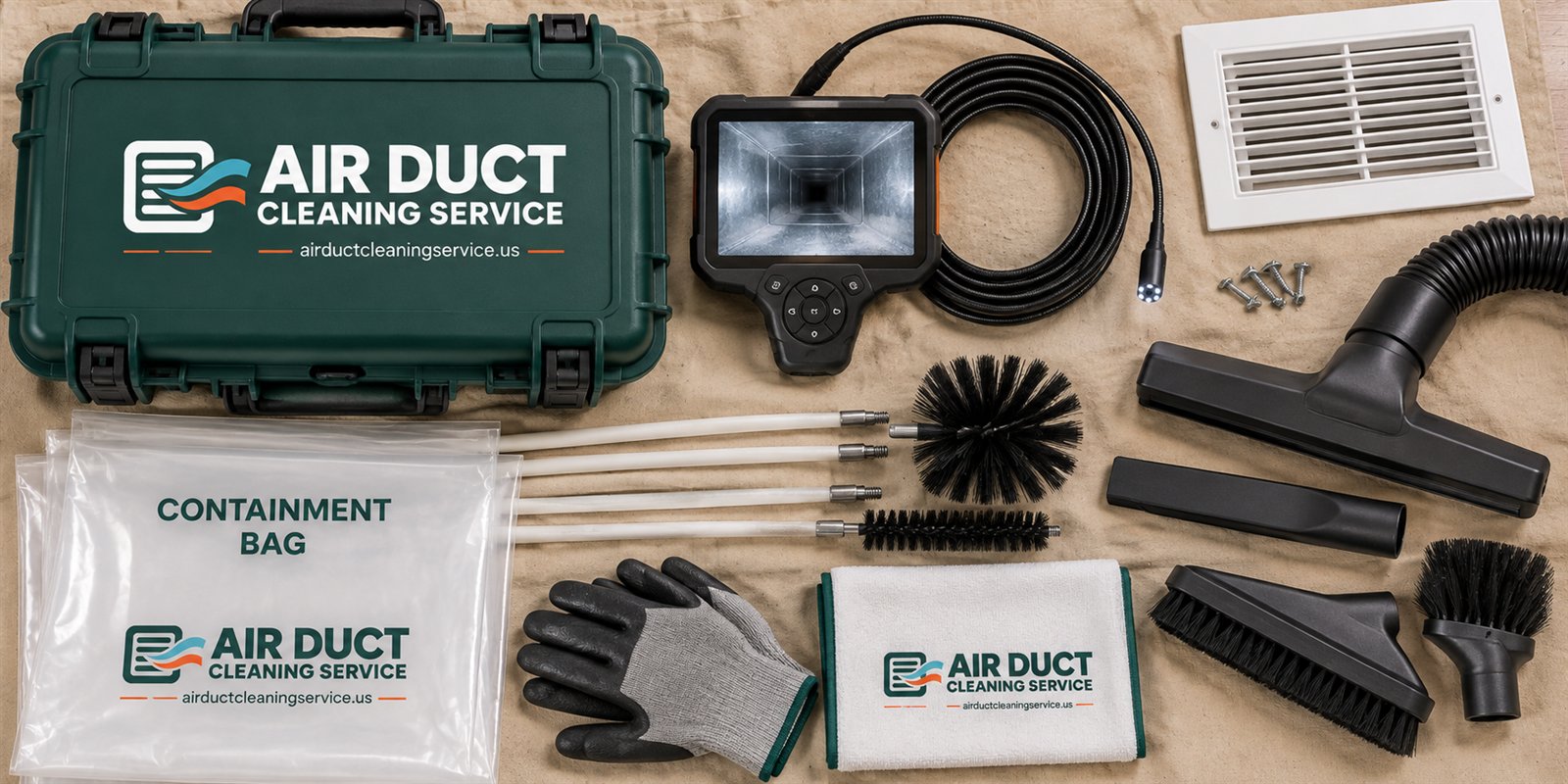
Cleaning generally uses rotating brushes on flexible rods, driven by a drill, combined with a vacuum that captures what is loosened. The technician works from the dryer end, the outside end or both, depending on access and the length of the run. Compressed air tools may be used in some cases. The aim is to pull the lint out through the vacuum, not blow it through the termination onto your wall or roof.
Afterward the technician reconnects the dryer, checks that the transition duct is intact and not crushed, and tests the airflow at the termination. Photos of the cleaned run, a note on any damage and an honest statement of any section that could not be reached should be part of the visit. If the run is damaged or poorly routed, you should hear about it plainly, so you can decide what to do next.
Rooftop terminations and attic sections
A roof termination is a cap or hood on the roof that lets the exhaust out. It should have a damper that opens when air flows and closes when the dryer stops, and it should not have a screen that traps lint. Over time, lint can pack the underside, birds can nest inside, and the damper can stick or break. Roof work should only be done by someone who is equipped and trained for it, and homeowners should not climb onto a roof to inspect a vent.
In the attic, the run may hang from rafters, pass over insulation or sit loosely on the ceiling. Hot attic conditions and lint make a poor combination, and attic sections are inspected for sags, loose joints and disconnections. A section that has come apart in the attic can leak damp, lint-laden air for a long time before anyone notices.
Storm season matters too. Wind can lift or damage caps. Debris from trees can fill them. After a hurricane or heavy storm, a dryer termination should be checked along with the rest of the roof, and the page on the after-the-storm duct checklist lists what to look for in the air system as a whole.
When a clean is not enough: rerouting and replacement
Sometimes the run itself is the problem. A very long path, many bends or a crushed section will clog again even after thorough cleaning. A foil or plastic transition duct that is the wrong material for the job may need replacing with a smoother, rigid or semi-rigid option. A termination that is damaged, screened or in an awkward place may need to be repaired or moved.
Those are installation and repair decisions, not cleaning decisions, and they may involve permits, roof work or a different trade. A cleaning provider can describe what the inspection found and why the run is likely to clog, but should not push a rerouting project without showing you evidence. The page on deciding about dryer vent rerouting goes through the questions to ask.
If your dryer is a gas model, vent work also has gas and carbon monoxide implications. A gas appliance should only be disconnected, moved or reconnected by someone qualified to do so. If any part of the work involves the gas supply, treat it as a separate task for a qualified tradesperson.
What you can do between visits
The simplest habit is cleaning the lint trap after every load. Do not run the dryer without the trap in place. Occasionally wash the trap screen with warm water and soap if it seems clogged with a film from dryer sheets or fabric softener, which can reduce airflow even when the screen looks clean. Let it dry completely before reinserting.
Avoid placing furniture or storage against the transition duct behind the dryer. Do not overload the dryer, and do not dry items that carry flammable residues such as cooking oil or certain chemicals. Check the outside vent from the ground when the dryer is running, and keep plants, mulch and debris away from wall terminations.
These habits reduce lint but do not replace occasional cleaning of the run. How often a run needs cleaning depends on length, material, laundry volume and the household. There is no single schedule that suits every home, and any service that insists on one for everybody is guessing.
Three example homes and what each run looks like
Consider a single-story block home in Hollywood with the laundry closet in a central hallway. The dryer sits far from any outside wall, so the exhaust travels up into the attic and across to a roof cap. The run is long, has two elbows and passes over insulation. In a house like that, lint tends to collect at the elbows and at the cap, and a sagging section in the attic is a real possibility. The inspection starts at the dryer and ends on the roof, with attic access in between.
Now picture a two-story townhouse in Pembroke Pines with the laundry on the upper floor against an outside wall. The run is short and nearly straight, ending at a wall vent a few feet from the machine. Lint buildup is usually modest, and the likeliest trouble is a flattened transition duct behind the dryer or a vent flap that has stuck partway. The fix is often quick and may only need a replacement transition duct and a cleaned flap.
Finally, think of a condo unit with the dryer in an interior closet. The exhaust may rise through a shaft shared with other units, or run along a hallway ceiling to an exterior wall. Building rules, association access and shared risers affect who can work on it and when. The cleaning may need to be coordinated with the building, and any damage to a shared section is a matter for management.
These three examples show why a standard package does not suit every home. The length, the number of bends, the materials and the termination all change the job. A provider who asks about those details on the phone is doing the right thing, and a provider who quotes without asking is guessing.
How this differs from air duct cleaning
A dryer vent is a separate system from your heating and cooling ducts. It carries exhaust from the dryer to the outdoors, and it never connects to the supply or return air that you breathe indoors. Cleaning one does not clean the other, and the equipment and methods differ. If you want both done, say so when you call so they can be planned together.
Some homeowners schedule both in one visit for convenience. Others do the dryer vent after noticing slow drying and the ducts after a renovation or an inspection. Neither order is wrong. What matters is that each service is described clearly and each result is documented.
For a wider look at what a cleaning visit includes for the air system, see the page on residential duct cleaning, and for the safety questions many homeowners ask, the page on the dryer vent fire safety FAQ.
Getting ready and calling
Before you call, note the dryer type (gas or electric), where the dryer sits in the home and where the termination is, whether on a wall or the roof. Mention how clothes are drying, any smells and anything you saw outside. Pull the dryer out only if you can do so safely, and do not disconnect a gas dryer yourself.
Quotes are given by phone. A simple wall vent may be described quickly, while a long attic run with a roof termination usually needs a closer look, and there is a service call charge that is explained on the phone before dispatch. The page about why quotes are given by phone explains how that works.
If you are unsure whether your dryer vent is a concern, describe what you see and let the person on the line help you decide. Call when you are ready, and have the dryer type, the location of the exit and any symptoms to hand.
Questions people ask
How can I tell if my dryer vent is clogged?
Common signs are clothes that need more than one cycle, an unusually hot dryer or laundry area, a burnt smell, lint around the outside vent and a flap that barely opens while the dryer runs. If you notice any of these, stop relying on the dryer and arrange an inspection of the exhaust run.
Is dryer vent cleaning the same as cleaning the lint trap?
No. The lint trap is the screen inside the dryer that you empty after each load. The vent run is the pipe that carries exhaust from the dryer to the outside. Lint that passes the trap settles in the pipe, so the run needs its own cleaning, separate from the trap.
Can I clean a rooftop dryer vent myself?
Climbing onto a roof is dangerous, and a damaged cap or sagging attic section needs to be assessed by someone equipped for the work. You can empty the lint trap and watch the outside vent from the ground, but leave roof and attic work to a qualified service provider.
What should I do if I smell gas near my dryer?
Leave the home immediately and call 911 and your gas utility from outside. Do not turn on lights, use the phone indoors or try to find the leak. Gas appliance connections and venting are work for a qualified tradesperson, not something to investigate yourself or to schedule through a website.
Will cleaning the run solve slow drying every time?
Often, yes, when lint is the cause, but not always. A crushed transition duct, a very long run, a stuck damper or a failing heating element can also slow drying. An inspection checks the run first, and if cleaning does not explain the problem, the technician should say so plainly.
Is the dryer vent connected to my air conditioning ducts?
No. The dryer exhaust is a separate pipe that leads outdoors. It is not part of the supply or return duct system, so cleaning one does not clean the other. If you want both addressed, mention it on the call so the work can be planned and documented separately.
Describe the situation by phone and we will tell you what the job involves. Quotes are given by phone. Jobs that cannot be quoted without seeing them need a technician on site, and the service call charge is explained on the phone before anyone is dispatched.
Related pages
- Home Duct lleaning: Step by step, what a whole-house duct cleaning visit includes for single-family homes in South Florida, from inspection and photos to the final check.
- Condo Duct Cleaning: Closet air handlers, short runs, building rules and association access: how duct cleaning works inside a South Florida condo or apartment unit.
- Dryer Vent FAQ: Plain answers on dryer vent lint, airflow and warning signs: what causes buildup, what you can check safely and when a technician should take a look.
- Dryer Vent Reroute: When a long or bent dryer vent run justifies a new path, what evidence points to rerouting, and why the work should be done by someone qualified.
- Treatments: Sprays, fogs and coatings are often offered with duct cleaning. Learn what they are, why they are optional and which questions to ask before saying yes.
- Evaporator Coil: Why the cooling coil is the dampest part of an air system in humid Florida, how it is inspected and what coil cleaning can and cannot do for comfort.