
Why dryer vents get a safety conversation
A clothes dryer pushes heated air through the drum and out through a vent duct to the outside. That air carries lint, the tiny fibers shed from clothing and towels. The lint trap catches most of it, but some passes through and settles on the inside of the duct, particularly at bends, at joints and at the exterior termination where a flap or louver slows the airflow. Over time a layer can build up and narrow the passage.
Lint is combustible, and a restricted vent makes the dryer work harder and run hotter. Fire safety organizations commonly list dryers among household appliances involved in house fires, and lint buildup is among the contributing factors they mention. That is a reason for ordinary attention, not for panic. Most dryers run for years without incident when the lint trap is cleaned, the vent is open, and installation is sound. The aim of this page is to help you spot the signs that a vent needs attention and to explain what is safe for you to do and what is better left to a professional.
Nothing here is a promise that any cleaning prevents a fire. What a cleaning does is remove accumulated lint and restore airflow along the duct. Our service page on dryer vent cleaning explains how that work is done.
Warning signs worth noticing
Several everyday clues suggest the vent is restricted. Clothes take much longer than they used to to dry, or need a second cycle. The top of the dryer or the laundry room feels unusually hot. Clothes come out damp or hot to the touch yet still wet. A musty or burnt smell appears when the dryer runs. You see lint collecting around the outside vent opening or accumulating behind the dryer. The exterior flap does not open fully, or barely moves when the dryer is on. Some dryers display a vent or airflow warning when sensors detect a restriction.
Any single sign can have another cause, such as an overloaded drum, a failing heating element, a worn seal or a lint screen coated in a film from fabric softener sheets. Taken together, or if they persist after you clean the lint screen, they justify a closer look. If you ever smell something burning, see smoke or notice scorched fabric, stop the dryer, unplug it if you can do so safely, and treat it as an emergency; if there is visible fire, leave the building and call 911.
What you can safely check yourself
Start with the lint screen. Clean it before every load, and every few weeks wash it with warm water and a little dish soap and let it dry, because softener residue can form a nearly invisible film that blocks airflow even when the screen looks clean. Look into the lint trap slot with a flashlight for visible buildup, and use a vacuum crevice tool carefully to remove loose lint that you can reach without disassembling anything.
Go outside and look at the vent termination. With the dryer running, you should feel a strong, steady flow of warm air and the flap should be fully open. A weak flow, a flap that flutters or stays shut, lint packed in the opening, a bird or rodent nest, or a vent covered by shrubs, paint or screens that clog with lint are all worth noting. Do not push objects up the vent. Do not run the dryer with the vent disconnected. Pull the dryer away from the wall only if it is easy and safe to do so, and check that the transition hose is not crushed, kinked or detached.
Leave gas connections, electrical connections and anything that requires opening the dryer cabinet alone. Gas dryers in particular should be serviced by a qualified appliance or gas professional, and exhaust problems with a gas dryer have carbon monoxide implications. If you smell gas, leave the home and call the gas utility or 911.
What a technician checks and does
A dryer vent visit begins with the same evidence-first approach as duct work. The technician looks at the dryer connection, measures or observes the airflow at the exterior termination, and examines the vent path: its length, the number of bends, the material, the way sections are joined, and where it exits the building. Rigid metal duct is preferred for the permanent run, while long runs of vinyl or foil flex are more prone to crushing, sagging and lint snagging. Plastic or vinyl duct is a known concern in the industry because of its flammability and its ridges.
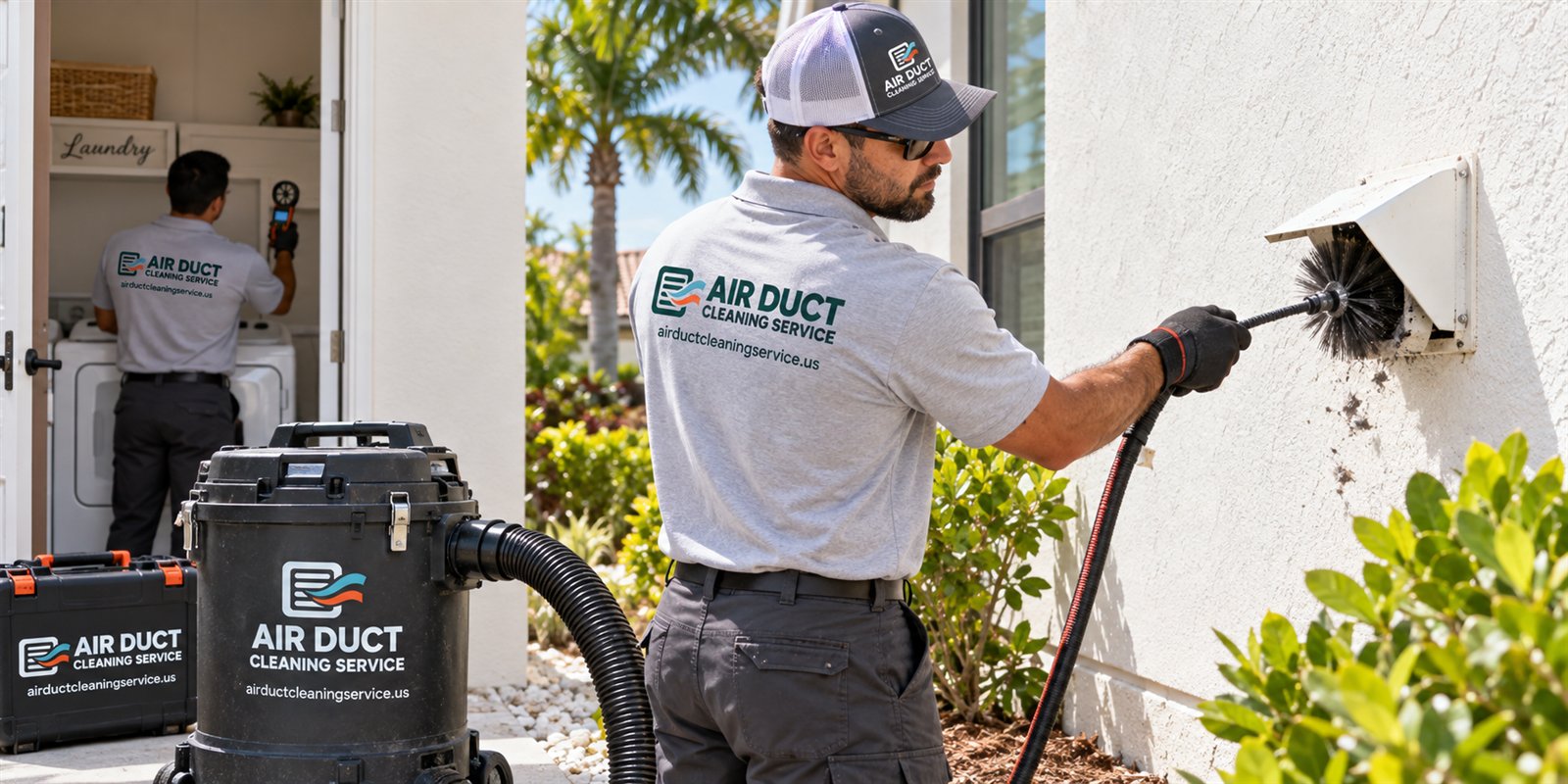
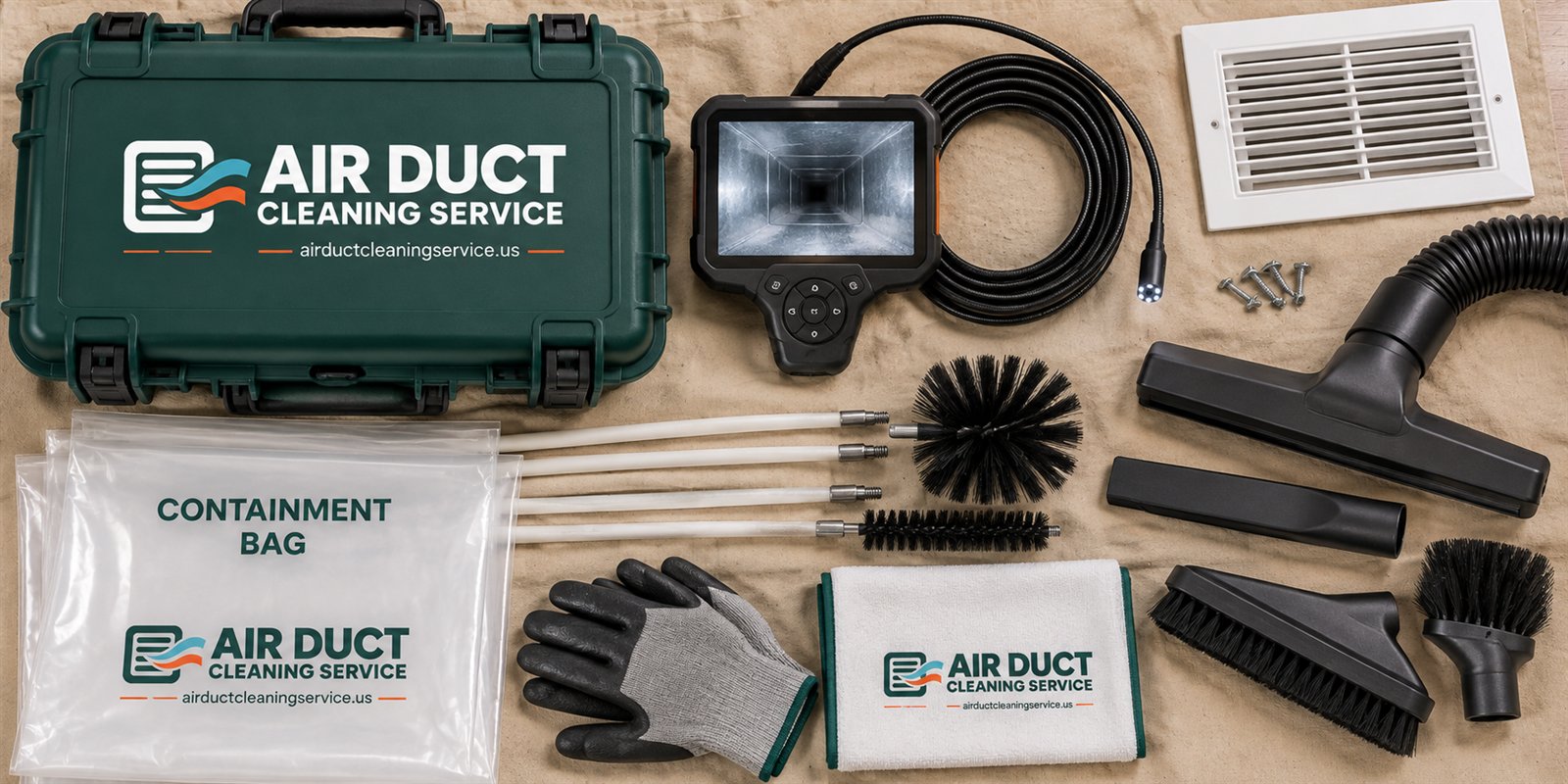
Cleaning is usually performed with rotary brushes on flexible rods, or with compressed air tools, combined with a vacuum to capture lint. The technician cleans from the inside and, where possible, from the outside, then checks that the exterior flap moves without sticking and that the transition connection is secure. A final airflow check shows whether the run is clear. If the vent is damaged, crushed, disconnected, routed poorly or too long for the dryer, the technician should say so and recommend a repair or reroute rather than cleaning something that cannot work properly. See deciding about dryer vent rerouting for when that conversation comes up.
Dryer vents in South Florida homes and condos
Local building types create their own situations. In many single-story homes the vent is short and exits through a nearby wall, which is easy to access and clean. In two-story homes and townhouses the dryer may sit upstairs with a vent that runs through a floor cavity or soffit to a distant exit. In condominium buildings, the vent may travel through a shared chase or exit on a high floor where reaching the outside termination takes extra access arrangements through the association.
Humidity and salt air play a part too. Metal terminations near the coast corrode, flaps can stick, and screens and pests such as birds, roaches or lizards can find their way into openings. Condo buildings often have rules about who may work on vents and when, and the unit owner may need to coordinate with management. The page on condo duct cleaning covers coordination, and the HOA and condo board duct guide speaks to shared systems.
How often should a dryer vent be checked?
There is no single interval that fits every home. A household that does large loads daily, dries heavy items such as towels and bedding, has pets that shed, or has a long or bent vent run will build lint faster than a couple that dries a few loads a week. The practical approach is to watch the signs listed above and to have the vent looked at when the dryer takes noticeably longer, when the home is new to you and the vent history is unknown, or when a move, a renovation or a dryer replacement puts the vent in front of you.
Replacing a dryer is a good moment to inspect the vent, because the old connection is already apart. Ask the installer to confirm that the vent is rigid metal where possible, secured with clamps rather than tape alone, no longer than the manufacturer's allowance and not crushed. Keep a note of when the vent was last cleaned, which fits well with keeping your own duct records.
Common mistakes that reduce safety
Several habits and installation shortcuts make vents more prone to problems. Using screws at duct joints can catch lint, so connections are generally made with clamps or foil tape designed for the purpose. Vents that end in an attic, crawlspace or garage dump moisture and lint where they should not be, and they should terminate outdoors. Long flexible foil runs squeezed behind a dryer lose airflow. Installing a screen over the exterior opening may seem protective but tends to clog with lint. Overloading the machine or drying very heavy items in one cycle also increases the strain on both the dryer and the vent.
Another common mistake is assuming a clean lint screen means a clean vent. The screen is only the first stage. Lint that passes through the screen goes on to coat the interior of the duct, the blower housing and sometimes the heating compartment, which is why a vent can be clogged while the screen looks perfectly clear.
Examples of how vent problems show up
A family of five in a single-story home notices that a normal load of towels now needs two full cycles. The lint screen is clean and the dryer is not old. Outside, the termination flap barely lifts and there is a ring of lint on the louver. The vent run is short and straight, so the answer is likely a cleaning of the run and the exterior opening, followed by a check that the flap moves properly. The dryer itself may not need any repair.
A condo owner on an upper floor has a dryer venting through a long chase to an exterior wall. Dry times have crept up and the laundry closet gets warm. The run has several bends and a flexible transition squeezed behind the machine. In this case the technician looks at the connection first, then at the length and bends, and may recommend replacing the transition with a short rigid or semi-rigid section and checking building rules about what may be changed. Cleaning alone may help only for a while if the layout itself restricts airflow.
A third household replaced an old dryer and noticed a faint burnt smell. The installer reused a crushed foil hose. The right step is to stop using the dryer until the connection is corrected, and then to have the vent run inspected for damage and lint. These examples show why the visit starts with the path and the airflow rather than with a standard package.
Dryer exhaust compared with air conditioning ducts
Dryer vents and air conditioning ducts are different systems that are often confused. The air conditioning ducts move cooled or heated indoor air around the building, and cleaning them addresses dust and debris in that circulating air. A dryer vent is an exhaust duct that sends hot, moist, lint-laden air outside. The two are cleaned with different tools, they present different safety questions, and one does not substitute for the other.
Some households ask whether a duct cleaning visit also covers the dryer vent. It does not, unless it is written into the scope. If you want both, say so on the call so that the plan includes the time and access each one needs. Bathroom exhaust fans are a third category, discussed on the page about bathroom exhaust vent cleaning, and kitchen range hoods are another. Naming each system in the scope avoids misunderstandings after the visit.
What to have ready when you call
Before calling, note the type of dryer (gas or electric if you know), where it is located, roughly how far the vent runs to the outside, and where it exits. Photos of the dryer connection and of the outside termination help. Mention the symptoms you have noticed and whether any smell, heat or smoke has been involved. If the unit is in a condo or rental, find out who is responsible for the vent and whether permission is required.
Quotes are given only by phone after a short conversation about the vent path and access. If the run is long, passes through a building chase or has a damaged section, an on-site visit may be needed first; a service call charge applies and is explained on the phone before dispatch. Call when you are ready, and describe what the dryer has been doing, so that the visit can focus on the evidence.
Questions people ask
How do I know if my dryer vent is clogged?
Common signs are longer drying times, a dryer or laundry room that feels very hot, damp clothes after a full cycle, a burnt or musty smell, lint around the outside opening and a flap that barely moves. Any one sign can have other causes, so check the lint screen first, then look at the outside vent while the dryer runs.
Can I clean the vent myself with a vacuum?
You can clean the lint screen and vacuum loose lint you can see and reach at the trap opening and behind the dryer. Do not run the dryer without a connected vent, and avoid dismantling the dryer or touching gas and electrical connections. A long or hidden duct run is better left to a technician with proper tools.
Is a plastic or foil flex vent a problem?
Vinyl and thin foil ducts are widely discouraged for permanent dryer exhaust because they can crush, sag and trap lint, and plastic is flammable. Rigid metal is generally preferred, with a short flexible connector only where needed. A technician can tell you what you have and whether it should be replaced.
Does cleaning the vent make a fire impossible?
No. Cleaning removes accumulated lint and restores airflow, which reduces one contributing factor, but no service can promise that a fire will never occur. Appliance condition, installation, user habits and the dryer itself also matter. Treat cleaning as one part of safe dryer use alongside lint screen care.
What if the vent exits somewhere I cannot reach, like a high floor?
In condos and multi-story buildings the termination may be on an upper wall or roof. Reaching it can require coordination with building management and suitable access equipment. Tell us the building type and floor when you call so the plan can account for access and any association rules.
Should I worry about a gas dryer and carbon monoxide?
A blocked exhaust on a gas dryer can affect combustion gases, so gas appliances deserve extra care. If you smell gas, leave the home and call the gas utility or 911. For any suspected exhaust or gas issue, involve a qualified appliance or gas professional alongside any vent cleaning.
Describe the situation by phone and we will tell you what the job involves. Quotes are given by phone. Jobs that cannot be quoted without seeing them need a technician on site, and the service call charge is explained on the phone before anyone is dispatched.
Related pages
- Dryer Vent Cleaning: Why long vent runs and rooftop terminations in Florida homes collect lint, what clearing a dryer exhaust involves, and the warning signs worth acting on.
- Dryer Vent Reroute: When a long or bent dryer vent run justifies a new path, what evidence points to rerouting, and why the work should be done by someone qualified.
- Condo Duct Cleaning: Closet air handlers, short runs, building rules and association access: how duct cleaning works inside a South Florida condo or apartment unit.
- Your Records: A simple home file for duct work: what to save, how to name photos and reports, and why organized records help with buyers, insurers and future technicians.
- HOA and Boards: What HOA and condo boards should know about duct work: common elements versus unit responsibility, choosing vendors, notices, records and avoiding disputes.
- Short-Term Rentals: How hosts of vacation and short-term rentals can manage odors, dust and cooling complaints with a filter routine, turnover checks and evidence-based cleaning.
Straight Answers to Smaller Questions We Hear at the Door
People often ask whether a long run of vent pipe is a problem by itself. Length matters because lint has farther to travel and more places to settle, especially where the pipe turns. A straight, short run is simpler to clean and easier to check, while a run with several elbows through a wall and up to a roof deserves more attention. We look at the layout, measure what we can, and explain what we find. We do not judge a vent purely by length; the material, the number of bends and the exit point all count.
Another common question is whether foil or plastic flexible hose is acceptable behind the dryer. Those soft, ribbed materials catch lint in every fold and can crush when the machine is pushed against the wall. Many homeowners are surprised how much the last few feet behind the appliance matter. A technician will look at the connector, see whether it is kinked, and tell you plainly if the material is a poor fit. Replacing a connector is a separate decision from cleaning, and we explain it before anything is changed.
People also ask whether a rooftop or wall cap with a screen is a good idea. Screens can clog quickly because lint hangs on the mesh, so we check the outlet for flap movement and for any buildup. The flap should swing open when the dryer runs and drop closed when it stops. Birds and small animals sometimes nest behind a cap in warm weather, which we mention as a finding rather than a conclusion. If anything looks off, we show you the photograph and talk through your options.