
Contact
Tell us what you need help with.
Describe the duct or vent concern and we will tell you what the service involves. Quotes are given by phone. If a job cannot be quoted without seeing it, a technician visits and the service call charge is explained before anyone is sent.
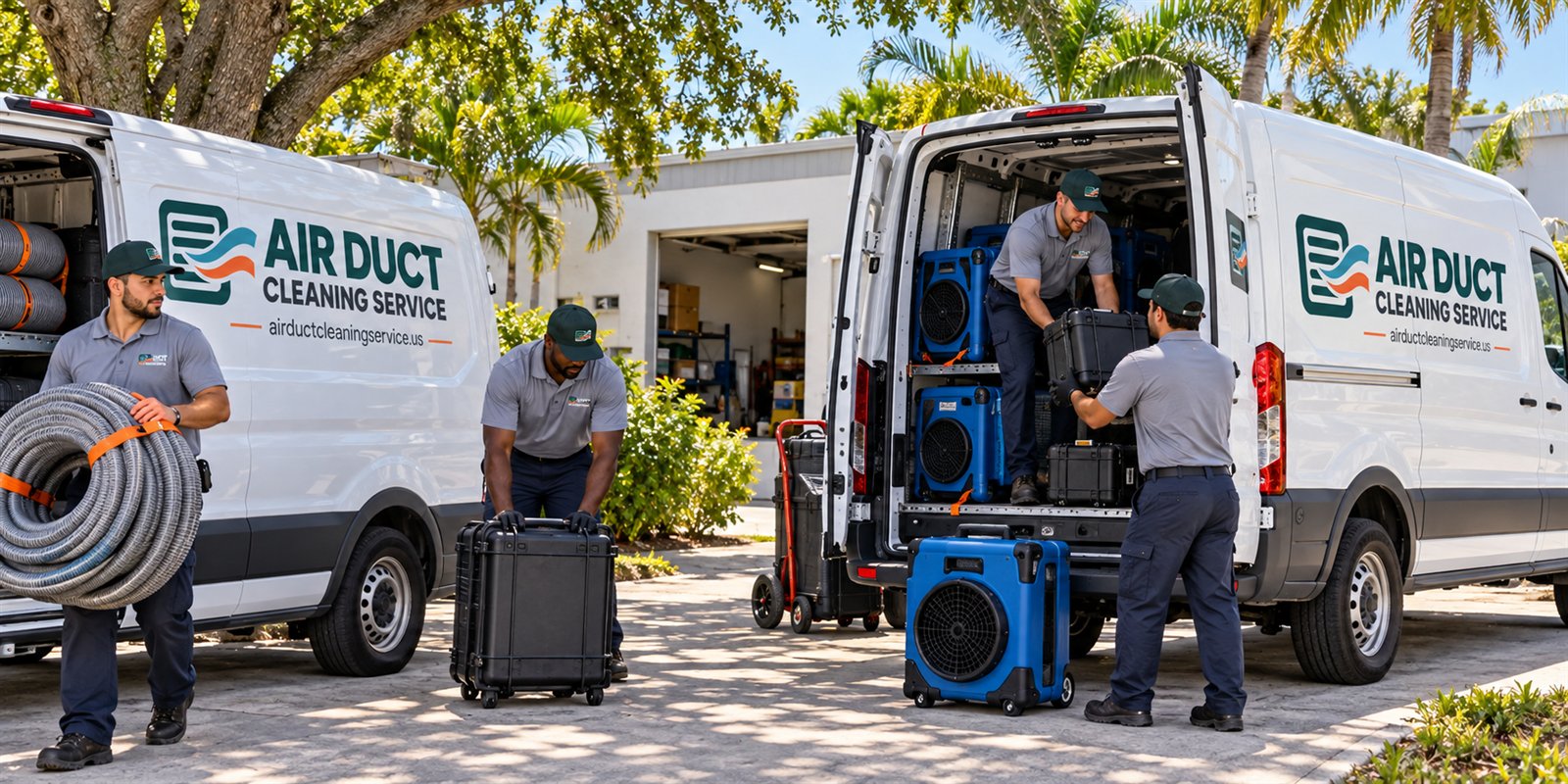
South Florida service conversations start here.
Have the address, the type of system or vent, and what you have noticed ready when you call. Camera inspection photos can show what is inside before any cleaning decision is made.
Before you call
What to have ready
- The property address and whether it is a house, condo or business
- Which vents or ducts concern you and what you have noticed
- Any recent renovation, water leak or pest issue
The phone number for this site is being added. Check back soon.
Describing the problem in your own words
The most helpful thing you can do before calling is describe what you are noticing in everyday language. You do not need technical terms. Dust blowing from a vent, a smell when the air starts, one room that never cools, water near the air handler, a dryer that takes several cycles to dry clothes, all of these are useful starting points. The person you speak with will ask follow-up questions to narrow things down. Whatever words feel natural are the right ones. Short, plain descriptions work best.
It helps to say when you first noticed the issue and whether anything changed around that time, such as a storm, a renovation, new equipment or a long period away. Even a rough timeline gives the technician a head start. If you took photos, mention them, since they can be shared during the visit. If you are unsure which category the problem falls into, such as duct, dryer vent or equipment, that is fine. Part of the conversation is helping you sort that out, and you will not be asked to commit to anything before it is clear.
There is no wrong way to describe a problem. We would rather hear a vague description and ask questions than have you guess at a diagnosis. The conversation is meant to sort out what kind of visit makes sense, and nothing is scheduled or decided until you are comfortable with the plan. Having the details written down before you call, even as a short list on your phone, keeps the conversation focused and makes sure nothing is forgotten. A reasonable first call usually takes only a few minutes and leaves you with a clear idea of what comes next.
Information about the building that shapes the plan
Several facts about the property change how a visit is planned. Whether it is a single-family home, a townhome, a condo or a commercial space affects access and rules. The number of floors, the number of air handlers and where they are located tell us how many access points to expect. The approximate age of the building or the equipment helps us anticipate duct materials and layout. Even a rough sense of which rooms are affected is valuable. A technician can often guess where to look from a short description of where the problem seems worst.
If you live in a community with an association, mention it. Some require notice, limit work hours, or ask for a description of the work. If you rent, mention that too, since the owner or manager may need to approve the visit. Gate codes, parking restrictions and building management contacts are worth having on hand. Think too about whether the symptom is constant or comes and goes. A problem that appears only at startup, or only on very humid days, points in a different direction from one that is always there.
None of this has to be exact. A good estimate is enough to start, and the technician confirms details on site. The goal is to avoid surprises, such as arriving at a gated community without access or discovering that the attic hatch is behind a closet full of boxes. None of these observations need to be precise, and you will not be asked to prove anything. They are simply starting points for an honest inspection. Photographs on a phone are often more useful than long descriptions, so keep a few handy.
What happens in the conversation after you reach out
After you call, someone talks through your situation, asks clarifying questions and explains what a visit would involve. The conversation covers the type of service that seems to fit, what preparation is needed and what the technician will look at. If another service would suit you better than the one you first asked about, we say so. If you are not the decision maker, say so and give us a contact for the person who is. Many calls come from tenants, adult children or property staff, and we are glad to speak with whoever is closest to the problem.
We do not give a diagnosis over the phone, because ducts, coils and drain lines have to be seen. What we can do is describe the likely possibilities and what the inspection will rule in or out. That keeps expectations realistic and avoids committing to work before anyone has looked. We also explain what happens next, including how the visit is arranged and what you will receive afterward, so you are not left guessing. Honest uncertainty at this stage is better than a confident guess that turns out wrong.
The scope and any quote are explained before work begins, and you are under no obligation to proceed after hearing them. If you need time to talk it over with a partner, a landlord or an association, that is fine. We can answer written questions you pass along and clarify anything that is unclear. You can call back with questions at any point, and the answers stay consistent. If you need the plan in writing before you decide, ask, and we will describe it in a message you can share with anyone else involved. Taking time over a decision is entirely reasonable.
Questions it is worth asking us
A good conversation goes both ways, so come with questions. Ask what the technician will check and in what order. Ask what equipment will come into your home and what will be protected. Ask how the work area will be left and what you will be told at the end. Ask what the technician does if they find something unexpected. It is reasonable to ask how photographs will be shared and whether a written summary is provided. Both are standard parts of how we work, and they are explained during the conversation.
It is also fair to ask what we cannot do. Some problems belong to an HVAC repair specialist, a roofer or a building engineer, and we would rather say so than attempt something outside our scope. We do not make health claims about cleaning, and we do not promise results we cannot verify. If you want to compare our approach with that of another provider, ask the same questions of each. Differences in scope and explanation are often more revealing than differences in anything else.
If you have been told something by another provider that does not sit right, bring it up. We will explain how we see it, and what the inspection can confirm or rule out. An honest second opinion is part of what a careful conversation is for. We welcome that comparison, because it helps you choose with confidence. A short list on paper beside the phone is all the preparation you need, and it makes sure the important points are covered before the call ends. Bring it to the call and we will go through it together.
Special situations worth flagging at the start
A few circumstances deserve mention up front. If anyone in the home is sensitive to noise or dust and will be present during the work, tell us so we can plan containment and timing. If you have pets, mention them. If there is a recent leak, storm damage or a suspected pest problem, say so, because those findings change how the inspection proceeds. People often hesitate to mention things they think are embarrassing, such as a pest problem, hoarding or an unfinished repair. We have seen all of it, and there is no judgment. The information simply helps the crew plan safely.
Medical equipment, home offices and overnight workers are also worth noting. A person working from home or sleeping during the day needs a different plan from a household that is out all day. We do not make assumptions, and we will adjust the schedule and order of work as much as reasonably possible. Safety concerns of any kind, including unstable floors, exposed wiring or aggressive animals, should be mentioned up front so that the crew can decide how to proceed. Dust sensitivity, strong cleaning products in the home and small children in the next room are examples of details worth passing along.
If the property is vacant, for sale or under renovation, tell us. A home in mid-renovation produces more dust than one at rest, and a vacant house presents different access arrangements. Being specific lets us prepare for what will actually be there. If it is not safe to work, we say so and suggest how to resolve the issue first. Honest information about the property and the people in it leads to a safer visit, a better plan and fewer surprises for everyone concerned. Mention it plainly.
Commercial and multi-unit inquiries
Businesses and property managers often have different priorities from homeowners. Operating hours, tenant notice, shared systems and records all come into play. When you reach out, describe the space, the number of systems or units and the times the building is quiet. Offices, restaurants, retail shops and small medical suites each have different constraints. If you are responsible for many tenants, a short list of the sites, with their addresses and the person at each, gives us what we need to plan. We can then suggest an order that suits the building's patterns of use.
For multi-unit properties, tell us whether the units share risers, shafts or exhaust lines, and who is responsible for each. We can handle one unit at a time or coordinate several in a visit, but the plan has to fit the building rules and tenant schedules. Written scopes are available for management approvals. For a tenant in a commercial building, check your lease before calling. Some leases give the landlord control over the air system, in which case the landlord must be involved. Phrases such as the lease says or the association handles are all useful clues.
We do not claim credentials or ratings to smooth these conversations, and we do not make promises about timing. What we offer is a clear description of the work, a consistent approach and honest reporting, including problems that belong to other trades. We help by describing the work in clear terms so the right person can decide. Written scopes can be adjusted for each building so that approvals move smoothly and the people responsible see exactly what is proposed. Being clear at the start prevents disputes later.
Sending photos, notes and details ahead of time
If it is easy for you, take a few photographs before the call. A picture of the air handler and its surroundings, the filter slot, a stained ceiling, the dryer vent cap outside or a register with visible buildup gives the technician useful context. Write down the make and model on the air handler label if you can read it without opening anything. A rough note of when the problem began and how it has changed since gives the technician useful context. Dates tied to a storm, a renovation or a visitor can help.
Notes are just as helpful as photos. A short list of the rooms that concern you, the times of day the problem is worst and anything you have already tried gives the visit a clear focus. If someone else has serviced the system recently, mention what they did and whether they left paperwork. If you can, write down a few questions of your own and bring them to the call. It is easy to forget them in the moment, and we want you to leave the conversation with answers.
Do not open panels or take apart equipment to get a better picture. Photographs of what is visible from the outside are enough. Anything inside is the technician's job, and attempting to access it yourself risks injury and damage to the unit. These preparations take only a few minutes and make the first conversation more productive. Do not worry about getting the technical names right. A photograph and a plain sentence are enough for the technician to understand what you mean, and any unclear points are cleared up in conversation before the visit takes place.
Scheduling around your life
Scheduling is a conversation, not a form. Tell us which days and parts of the day are workable, whether someone will be home, and whether access needs to be arranged in advance. We will propose a plan that fits, and if something changes, you can let us know and we will adjust. If the best time for you changes, tell us. We would rather adjust than have a visit that does not suit your day. Work is planned around people, and a short note beforehand is enough.
We do not promise specific arrival or completion times, because each job depends on what is found. What we can do is explain how the visit is likely to unfold, what you should be ready for and when to expect an update. If anything runs differently from the plan, we tell you directly. Where someone else will be at the property in your place, such as a neighbor, a property manager or a family member, make sure they know what to expect and who to contact if there is a question.
For condos, rentals and managed properties, allow a little extra lead time for approvals. Some associations need notice and some landlords need to sign off. Starting that process early removes the most common cause of delay and lets the visit go ahead without complications on the day. Clear communication on both sides makes the visit simple. If something changes at the last minute, a quick call is all that is needed. We will confirm the plan in plain terms, and you can change it with a short call if your day shifts.
What to do while you wait for the visit
There are a few sensible steps to take before the technician arrives. Check your filter and replace it if it is dirty, and write down its size. Make sure the thermostat is working and note the temperature you normally set. Clear a path to the air handler and the register nearest it, and make sure the attic hatch or closet is accessible. Pets, children and family members with different schedules all deserve a thought. Think about where each can go during the work, and tell us if a door needs to stay closed.
If you notice water around the air handler, a persistent drip, or a sudden loss of cooling, do not wait for the visit before taking basic precautions. Turn the system off if there is standing water, and mention it when you call. Do not try to clear drain lines or open sealed panels on your own. If you are expecting visitors or have an event planned soon after, tell us. We can discuss what is practical and help you plan around it. Turn off the system only if you notice standing water or a safety concern, and tell us you did so.
Keep any records you have of past service, equipment manuals and previous inspections. They are useful for the technician and for you. If your situation changes before the visit, such as a new leak or a different schedule, call and let us know so the plan reflects what is true. Small arrangements like these make the day easier for everyone involved, and they ensure the crew can concentrate on the work itself. These simple steps put you in a good position to get the most from the visit.
Following up after the visit
After the visit, you will have a clear account of what was found and what was done. If follow-up work is suggested, whether cleaning, repair or referral to another trade, it is explained so you can decide at your own pace. Nothing is added to the scope without your agreement. A tidy summary also helps if you ever need to talk with an HVAC contractor, an insurer or a building manager. It is a neutral description of what was found, written to be understood by someone who was not there.
If questions come up later, such as whether a noise is normal or how to read the photographs, call and ask. We would rather answer than have you wonder. If a concern arises related to the work, describe what you noticed and we will look at it with you and explain what we think is going on. If the summary leaves out something you wanted to know, ask. We can add detail or explain it in conversation, and we would prefer to clear up uncertainty now than leave you wondering.
Keep the written summary and photographs together with your equipment paperwork. They are a useful reference for the next service call, for a landlord or for a future buyer. A record of what was found and when is often more valuable than people expect. That open line is part of how we work, and it continues after the visit is over. Whatever you decide after the visit, you will have clear information to base the decision on, and you are welcome to return with questions as they arise. Good records and open communication are the foundation of the service we offer.