
Why a child care building needs a written plan, not a one-time visit
A daycare or small school is not a house. It has more people per square foot, doors that open all day, shoes that carry in sand and landscaping dust, art supplies, snack areas, nap rooms and a schedule that cannot easily be interrupted. All of that puts different demands on an air system than a family of four would. It also puts a different kind of pressure on the person in charge, because parents ask questions and expect to hear something better than a shrug.
The most useful thing a director can have is not a one-time cleaning but a short written plan. The plan says who looks at the filters and how often, who checks the condensate drain lines, who is allowed to open a duct access panel, who is called when something looks wrong, and where the photos and reports are filed. When a parent, an inspector or an insurance adviser asks what the facility does about its air system, the director can hand over a folder instead of improvising.
A plan also protects staff from guessing. Without one, a well-meaning maintenance person may vacuum a register, spray something from a can into a return grille, or tape over a vent to stop a draft. None of those actions is a cleaning plan, and some of them cause problems. Writing the plan down, even on two pages, replaces guesswork with a routine.

Nothing on this page replaces rules from your licensing agency, fire marshal or building department. Those rules come first. What follows is practical planning for the air-handling side of the building, written for a layperson who has to make decisions and keep records.
What is different about air systems in facilities with children
Child care rooms tend to be warm, busy and full of soft materials. Rugs, cots, mats, stuffed toys, paper and cloth all shed fibers into the room, and those fibers travel to the return grilles. In many older buildings the return is a simple opening, sometimes with a filter slot that nobody has opened for a long time. A heavily loaded filter or a clogged return can reduce airflow, which makes rooms feel stuffy and makes the equipment work harder.
Children also change the moisture picture. Many people in a room, frequent door openings and wet-area use such as sinks and bathrooms raise indoor humidity in South Florida, where the outdoor air is already damp for much of the year. A system that runs for long hours and cools unevenly can leave some rooms cool and damp while others stay warm. That kind of imbalance is worth recording, because moisture is the condition that makes any surface in or near a duct more likely to develop growth.
Some buildings that house child care were not built for it. A strip-mall unit, a converted house or a church hall may have a residential-style system serving a commercial-style crowd, with ducts routed through ceilings that were modified over time. Knowing which kind of system you have is the starting point for everything else. Our page on air handler basics explains the parts a facility manager should be able to point to.
Finally, the people using the space cannot speak up the way adults can. A toddler will not tell you the room smells musty. That is a reason to build routine observation into the plan, such as a staff member walking each room at opening time and noting anything unusual, rather than waiting for a complaint.
Start with the filter and the drain, not the ducts
In most facilities the first and simplest improvement is not a duct cleaning at all. It is a disciplined routine for the filter and the condensate drain. The filter is the part designed to catch what the air carries, and when it is overloaded or missing, more material lands on the coil and in the blower compartment. The drain line carries away the water the coil removes from the air; when it is partly blocked, water backs up into the pan, and damp surfaces appear where they should be dry.
Walk through the routine with your HVAC contractor or maintenance person. Find every filter location, because systems often have more than one: a grille at the ceiling, a slot at the air handler, or a rack in a closet. Confirm the size printed on the filter frame matches what is in the slot, and that the arrow on the frame points toward the blower. Our page on filter size and placement covers the common mistakes, including filters that are too small and leave gaps around the edges.
For the drain, ask a qualified technician to show you the line, the pan and any float switch, and to explain what a normal condition looks like. Staff should know the signs of a problem without touching anything: water stains on a ceiling tile below the air handler, a musty smell near the closet, or a wet floor. When those appear, the response is to call, not to improvise. Our page on the drain line check explains what a technician looks at.
Only after the filter and drain are under control does it make sense to ask whether the ducts themselves need attention. A duct cleaning on top of a neglected filter routine is likely to see the same dust return, and a careful provider will tell you so.
What an evidence-first inspection records in a child care building
An evidence-first inspection means the provider looks before recommending anything, shows you what was found, and writes it down. In a facility, the inspection normally covers the air handler or handlers, the filter locations, the visible parts of the supply and return ducts through access panels or registers, and the condition of the grilles. A camera may be used to see into runs that cannot be reached by eye.
The useful output is a set of dated photographs and a short written note for each area. For example, a photo of the blower compartment as found, a photo of the coil face, a photo of the inside of a return trunk, and a note saying whether the surfaces looked dusty, damp, stained or damaged. If something looks like it might be growth, the report should say that it looks like it might be, and say that visual inspection alone cannot identify a substance. Our page on visible mold versus dust explains why that restraint matters.
A good report separates three things: what was seen, what it might mean, and what is recommended. It does not blend them into a sales pitch. If the ducts look dry and lightly dusty, the honest recommendation may be no cleaning now and a recheck at a later date. If the report finds heavy debris, water damage or pest evidence, the recommendation changes, and the photos show why.
For a facility, ask that the report be addressed in a form you can file. Our page on what the written report should say lists the items to expect. Keep the report with your other maintenance records so the next person in your job inherits the history.
Scheduling work around children, naps and meals
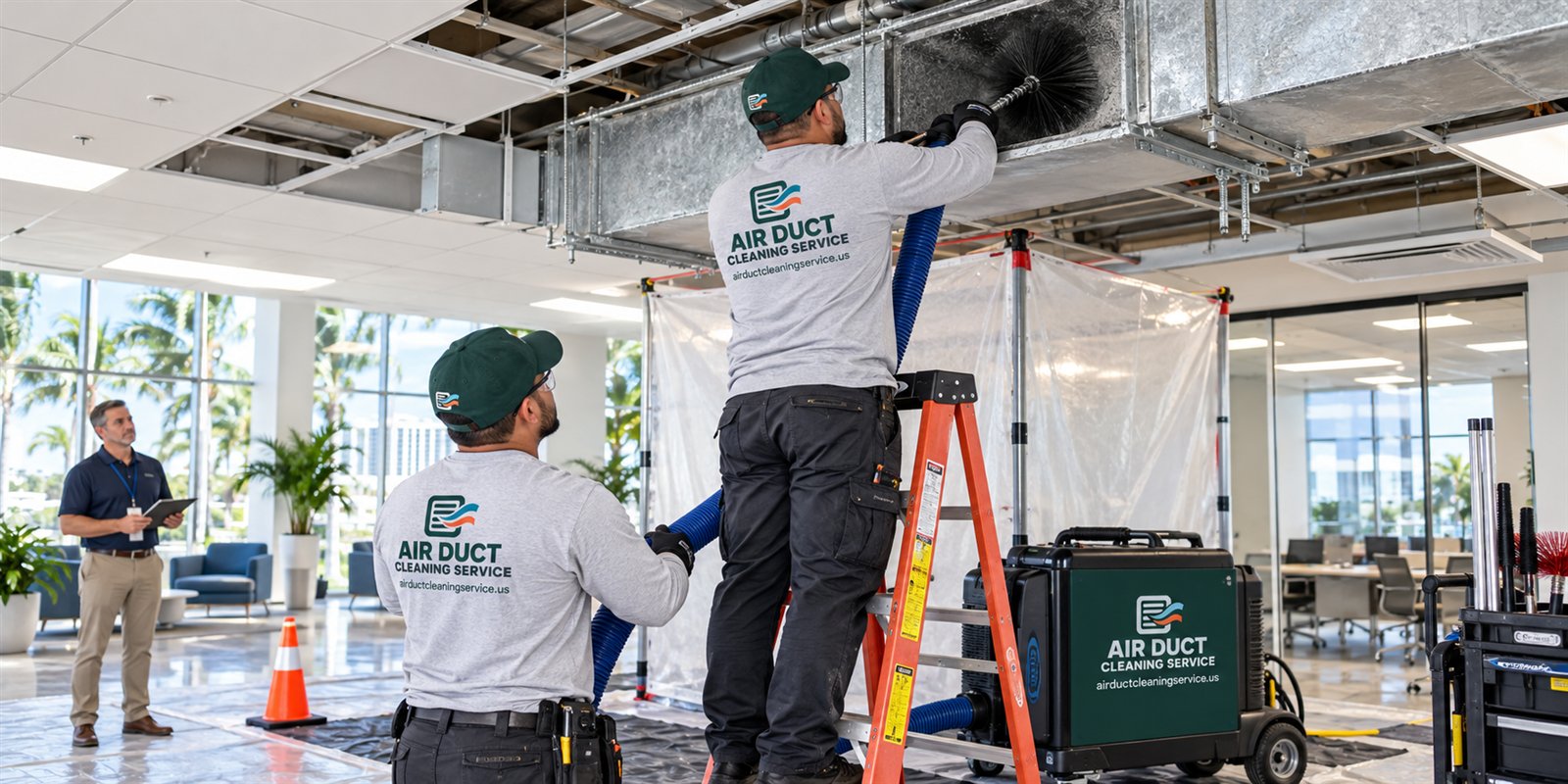
The practical challenge in a child care building is timing. Duct cleaning uses a vacuum collection machine, brushes or air tools, and access openings cut or opened at the trunk. It can be loud and it moves dust, so the work is best done when the rooms involved are empty. That usually means evenings, weekends or a closure day, and the director has to plan for it.
Ask the provider to describe the work area before the day. Which rooms will be affected, where equipment will be set up, how floors and furniture will be protected, and how the work area will be separated from any space still in use. Ask where the vacuum collection equipment will be placed and how its exhaust is handled, because the dust has to go somewhere that is not the classroom. Our page on the negative air machine explains the usual setup.
Plan the aftermath too. Surfaces in the rooms should be wiped, toys and cots covered or moved before the work starts, and the system should be run and checked before children return. If the schedule is tight, tell the provider in advance, and be willing to do the work in sections rather than the whole building at once. A careful provider would rather split the job than rush it.
Be cautious about any provider who offers to work while children are present in the same rooms. That may be a convenience for them and it is a risk for you. Your licensing rules may also limit what can happen during operating hours, so confirm with the agency when in doubt.
Products, sprays and treatments: ask hard questions
In a building with young children, anything applied to duct surfaces deserves extra scrutiny. Some providers offer sanitizers, fogs, coatings or sealants as add-ons. Whether any of these is appropriate in a given building is a decision that should be made with the written product information in hand, not on the spot during a visit.
Ask for the product name, the manufacturer's label and the safety data sheet. Ask what it is intended to do, where it is allowed to be used, and what the label says about occupied spaces and re-entry. Ask whether it is needed at all. In many cases a thorough mechanical cleaning and a dry system leave nothing for a chemical to do, and a provider who insists a spray is mandatory is making a sales point rather than a technical one. Our page on sanitizer and treatment questions goes through what to ask.
Be equally careful about air purification devices installed in the air handler. Ultraviolet lights, bipolar ionizers and similar products come with claims, and the evidence behind those claims varies. A reasonable approach is to ask what problem the device is meant to solve in your building, what independent information exists, and what maintenance it needs. Our page on UV lights in air handlers explains where such devices sit and what they do and do not address.
Whatever you decide, put the decision and the product information in your file. If a parent later asks what was done, you will have the answer in front of you.
What to say to parents, and what not to promise
Parents ask about air quality because they care, and a director's instinct is to reassure. The safest reassurance is factual: here is what we inspect, here is how often, here is who does it, and here is where the records are kept. That is a statement you can stand behind.
Avoid promising results that nobody can promise. A duct cleaning does not cure illness, and it is not a medical treatment. It does not ensure that children will get sick less often, because colds and other illnesses spread through contact and many other routes. It does not ensure any particular level of dust afterward, because dust returns from the building, the people and the outdoors. A provider who makes health claims is going beyond the evidence, and a facility that repeats those claims to parents takes on the same risk.
If a parent reports a specific concern, such as a child who seems to react in a certain room, treat it as information. Note the room, the time and what was noticed, then look at the obvious physical causes: a dirty filter, a damp spot, a recent paint job, a new carpet, cleaning products used in that room. Suggest the parent speak with the child's doctor about the child's health. Your role is to maintain the building and be transparent, not to diagnose.
A short, friendly note in the parent handbook works well. It can say that the facility changes filters on a set schedule, has the air system inspected by a qualified provider who documents findings with photographs, and will respond to specific concerns. Keep the wording modest and accurate.
A maintenance record a director can actually keep
The record does not need dedicated software. A binder or a shared folder works if it is consistent. For each air handler, list its location, the rooms it serves, the filter size and where the filters are, and the date the filter was last changed. Add a line for the drain line and pan: date checked, who checked, what was seen.
Add a section for inspections and cleanings. For each visit, file the provider's name, the date, the scope, the photos before and after, and the written findings. Add notes about anything that changed afterward, such as a room that now feels cooler or a smell that went away. Over time this becomes the facility's own evidence file, and it makes it easier to decide when something is actually different from before. Our page on keeping your own duct records offers a simple layout.
Include storm and outage events. After a power failure, a roof leak or a flood, note what happened and what was checked. Our after the storm checklist pairs well with this record, because it lists what to photograph for insurance conversations.
Finally, name a backup. If the person who normally handles the system is out, someone else should know where the file is and who to call. That small step prevents a lapse from becoming a gap of months.
How the call works and what to have ready
When you are ready to talk to a provider, the first step is a phone call. Quotes are given by phone only, after the provider has asked about the building: how many air handlers, roughly how many rooms, the kind of ducts if you know, any history of water or pests, and any recent renovation. For a more complicated facility, the provider may recommend an on-site visit before quoting. If a visit is needed, there is a service call charge, and it is explained on the phone before anyone is dispatched.
Have some basics ready. The building type and rough size, the number and location of the air handlers, the age of the equipment if known, the date of the last filter change, and any specific concerns such as a smell, a stain or a pest sighting. Photos of the air handler closet and the registers help the conversation. Our page on what happens on the phone call walks through the questions you will hear.
Ask the provider to explain how they document work, what the report includes, and how they handle a facility with scheduled hours. Ask whether they can work around closures and what protection they use inside rooms. A provider who answers plainly and without pressure is one worth continuing with.
If your facility has a question that does not fit any of this, say so on the call. Child care buildings vary widely, and the useful answer is the one that fits yours. When you are ready, call and describe the building, and the conversation can go from there.
Questions people ask
How often should a daycare have its ducts cleaned?
There is no fixed schedule that applies to every building. A careful provider inspects first and recommends cleaning only if the evidence supports it, such as heavy debris, water damage or pest signs. What every facility does need is a routine for filters and drain lines, plus periodic inspection with photographs so decisions are based on what is actually inside the system.
Can duct cleaning be done while children are in the building?
It is best done when the affected rooms are empty, because the work moves dust and uses loud equipment. Evenings, weekends or closure days are the usual choices. Your licensing agency may also set rules about what can happen during operating hours, so confirm with them, and ask the provider how the work area will be separated and protected.
Will cleaning the ducts make children healthier?
No provider should promise that. Duct cleaning removes debris from the air system, but illness spreads in many ways, and cleaning is not a medical treatment. If a parent has a health concern about a child, the right step is to talk with the child's doctor while the facility looks at obvious physical causes such as filters, moisture and recent renovation.
Should we allow the provider to spray a sanitizer in the ducts?
Ask for the product name, label and safety data sheet first, and ask what problem it addresses in your building. Many cleanings need no chemical at all. Anything applied in a child care setting should be allowed by the product label for occupied spaces, and the decision should be documented in your file.
What records should a facility keep about its air system?
Keep filter change dates, drain line checks, inspection reports with dated photographs, cleaning scopes and before and after photos, and notes about storms, leaks or odors. Store them together and name a backup person who knows where they are. These records answer parent and inspector questions with facts instead of guesses.
How do I get a quote for a facility?
Quotes are given by phone only. The provider will ask about the number of air handlers, rooms, duct type and any history of moisture or pests. A complicated building may need an on-site visit first, and there is a service call charge that is explained on the phone before dispatch. Call and describe the building to start.
Describe the situation by phone and we will tell you what the job involves. Quotes are given by phone. Jobs that cannot be quoted without seeing them need a technician on site, and the service call charge is explained on the phone before anyone is dispatched.
Related pages
- HOA and Boards: What HOA and condo boards should know about duct work: common elements versus unit responsibility, choosing vendors, notices, records and avoiding disputes.
- Photo Documentation: Before and after photos are only useful if they are honest. See what a good duct photo set contains, how it is labeled and how to spot a misleading one.
- Choosing a Cleaner: How to tell a careful duct cleaner from a rushed one: evidence shown first, method explained, scope in writing, and conduct that respects your decision.
- Young Families: Calm, accurate guidance for parents on ducts, vents and filters: practical hygiene steps, what cleaning can and cannot do, and when to ask for an inspection.
- Drywall and Paint: How to protect a South Florida air system during drywall, sanding and painting: capping registers, stopping the fan and timing any cleaning afterward.
- Commercial FAQ: Answers for business owners and managers on duct work in commercial spaces: scheduling around operations, downtime, access, documentation and scope.