
What the service call charge is
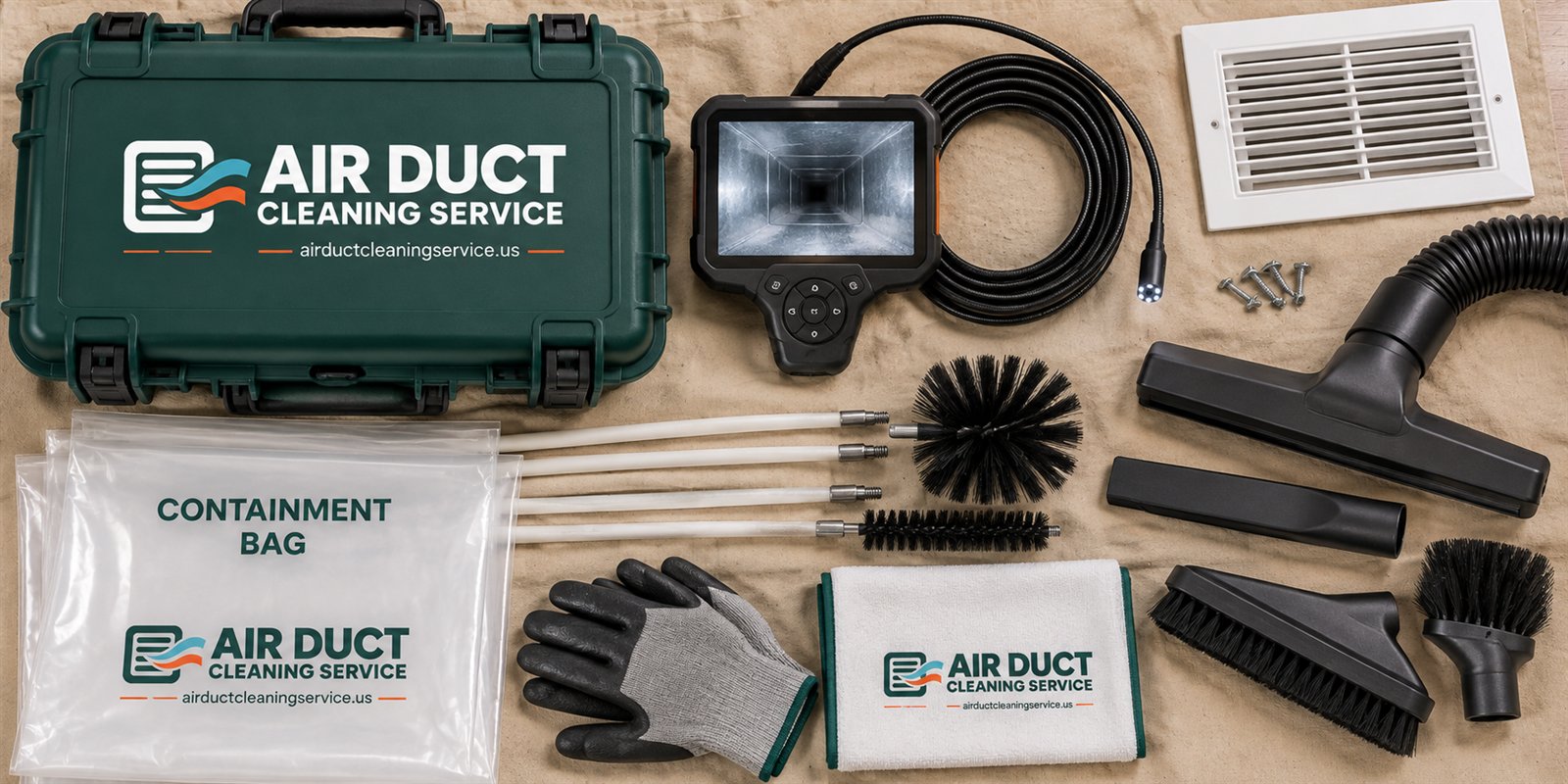
The service call charge is the cost of sending a qualified technician to your property to look at a situation and tell you what they find. It covers the technician's time, travel, equipment such as lights and a camera, and the work of documenting the findings. It is a charge for a visit and an assessment, separate from any cleaning or repair work that may follow.
It exists because a visit is real work. Before anyone arrives, the call is taken and scoped, a technician is assigned and the visit is scheduled. On the day, the technician drives to your property, inspects the air handler, looks into the ducts through access points, photographs conditions, takes notes and explains the findings to you. Afterward there is the written summary. None of that is trivial, and it takes the same time whether or not any further work follows.
On this site, the charge is explained on the phone before anyone is dispatched. That is a firm part of how the process works, because it means you decide to go ahead knowing the terms. You will not discover it on an invoice after the fact.

The amount is not listed on this page, because quotes and charges are given by phone only. That may feel inconvenient, but it avoids showing a figure that may not apply to your situation, since the visit's scope depends on the size and type of property. Our page on why quotes are given by phone explains the reasoning in more detail.
When a visit is needed in the first place
Many duct jobs never need a visit before a quote. A typical single-family home with one air handler and a straightforward system can often be scoped by phone, and an inspection is built into the job. The service call charge applies when the situation is too complicated or uncertain to define from a description.
Examples include a large home with multiple air handlers and zoning, a condominium building where several units or shared risers are involved, a commercial space, a property with a history of flooding, fire, a roof leak or pests, and any case where the main question is what condition the ducts are in rather than how to clean them. Another example is a situation where the symptom is unclear, such as a smell that could come from the ducts, the drain, the attic or somewhere else.
In those cases a quote given blind would be a guess. The visit replaces the guess with evidence. The technician sees the system, photographs what is relevant and can then say what, if anything, is recommended and what it would involve. Our page on how duct inspection works describes what happens during a visit.
The decision about whether a visit is needed is made on the call. If you are uncertain, ask. A careful provider will explain why they recommend a visit and what you would get from it, and will not push a visit when a phone quote would do.
What you receive for the charge
The most important thing you receive is information. The technician looks at the actual system and reports what they see. That typically includes the condition of the air handler, the blower compartment and coil where accessible, the filter and filter location, the drain pan and line, the visible parts of the ducts and any signs of leakage, moisture, damage or pest activity.
You also receive documentation. Photographs of key locations, labeled so you know what you are looking at, and a written summary of the findings. The summary separates what was observed from what it might mean and from what is recommended. If something looks like it might be growth, the report says that it looks like it might be and notes that identification needs testing. Our page on what the written report should say lists the usual contents.
You receive a recommendation, which may be to clean, to repair, to refer to another trade or to do nothing and recheck later. If cleaning is recommended, you receive a quote for a defined scope. If nothing is recommended, you have a record of the condition of your system that you can keep with your files and use if questions come up later, such as when selling the property or talking to an insurer.
Finally, you receive an explanation. A good technician takes the time to show you what they found, answers questions and explains the options. That conversation is part of what the charge covers.
How the phone conversation handles it
The sequence is deliberate. First, you call and describe your property and situation. Second, you are asked the scope questions. Third, if a visit is recommended, the provider tells you why and explains the service call charge: what it is, what it covers and what happens afterward. Only after you understand and agree is a technician dispatched.
This ordering protects you. You are never sent a technician and then told about a charge. You can ask questions, think it over, call back or decide to try something else. If you decide not to proceed, nothing happens and you are not charged.
It also protects the provider's time and yours. A visit booked without a clear understanding of what it is for tends to end in confusion. A visit booked after a clear conversation, with the right access arranged and the right people informed, runs smoothly. Our page on what happens on the phone call walks through the whole flow.
If anything about the charge is unclear when you hear it, ask for it to be explained again. There is no penalty for asking, and a provider who is impatient about it is telling you something.
What the charge is not
The charge is not a hidden deposit on a larger job, and it is not a way to lock you into work. You are not obliged to book anything after the visit. Whether you proceed is up to you, and the findings and photographs are yours to use however you like, including to get a second opinion elsewhere.
It is also not an indication that something is wrong. A visit is simply how a complicated situation is assessed. Many visits conclude that the system is in reasonable shape, or that the real issue is something else, such as a drain or a leak, and that cleaning is not the answer. That is a legitimate and useful result.
Nor is it a sales device. A technician who comes only to sell a job is not providing an assessment, and that is not the intention here. The value of the visit lies in the evidence, and the recommendation follows from it. If the evidence does not support cleaning, the technician says so.
Finally, the charge is not something to be argued down by pressure. It is explained plainly and applied consistently. If that is not what you are looking for, you can decide not to book the visit, and the call will still have given you useful information.
How it compares with a no-visit job
For straightforward homes, the process skips the separate visit. You call, the scope is established, and a quote is given on the phone. The inspection happens as part of the job: the technician looks first, shows you what they find, and only then proceeds with the agreed work. If the inspection reveals something outside the scope, you are told and the scope is adjusted only with your agreement.
For complicated properties, the visit comes first because the quote depends on what is found. Think of it as the difference between choosing a standard service and commissioning an assessment. The first is priced from a description. The second begins with an expert looking, because the description is not enough.
In both cases, the same principles apply: evidence before recommendations, scope before price, documentation throughout. The service call charge simply reflects the extra step in the complicated case. Our page on deciding for a condo unit versus a building shows one situation where the difference arises.
If you are not sure which category you fall into, describe your property and let the provider tell you. The honest answer will often be clear from a few questions.
Property managers, boards and landlords
If you manage a property for others, the charge raises a few practical points. Ask who is authorized to approve a visit and who is billed. For associations, a board may need to approve work in common areas, while an individual owner can approve work inside a unit. For landlords, tenant coordination and access need to be arranged in advance.
Keep the documentation from any visit in the property file. A dated report with photographs is useful for budgeting, for explaining decisions to owners and for any later dispute or insurance conversation. Our pages on property manager duct programs and HOA and condo board duct guidance describe how to build that record.
For multi-unit buildings, a visit can scope the whole property so that work can be planned and priced sensibly. A quote built from the visit is more reliable than one built from the number of doors. Ask the provider to explain how they handle buildings with shared risers and common equipment.
If you manage many properties, the same approach applies to each: scope first, evidence second, price third. The consistent record you build becomes more valuable over time.
What to expect on the day of the visit
On the day, the technician arrives, introduces themselves and asks you to show them where the air handler and any access points are. They will usually begin by asking you to repeat what you have noticed, because the symptom guides where they look first. They then inspect the equipment, open access panels where it is appropriate, use a light and a camera to see into places that cannot be reached by eye, and photograph what they find.
You are welcome to follow along. A good technician shows you the screen or the photographs as they go and explains each one in plain words: this is the blower wheel, this is the coil face, this is the inside of the return trunk, and this is what the surfaces look like. If something is unclear, ask. Seeing the evidence yourself is the point of the visit.
Plan for access. Clear the area around the air handler, make sure pets are secured, and arrange for attic access if the ducts run there. In a condominium or managed building, confirm in advance that the technician can enter and that any required notice has been given. A visit that cannot reach the equipment is a wasted visit, and a short call beforehand avoids it.
At the end, the technician summarizes the findings and the recommendation, tells you when the written summary and photographs will reach you and answers questions. If a quote for work is appropriate, it is given for the defined scope, and you decide in your own time.
Questions to ask when the charge is explained
A provider who answers these plainly is giving you the information you need. If any answer is vague, ask again, and if it stays vague, consider whether you want to proceed. The point of explaining the charge before dispatch is that you can decide with full information.
When you are ready, call and describe your property and situation. If a visit is advised, the charge is explained on the call, and a technician is sent only after you agree. If it is not needed, you will hear that too, and the next step will be a phone quote.
- What exactly does the service call charge cover, and what does it not cover?
- What will I receive afterward: photographs, a written summary, a recommendation?
- Is there any obligation to book work after the visit?
- How long will the visit take, and what access will the technician need?
- What happens if the visit finds that nothing needs doing?
- If I do book work, how is the quote built, and what could change it?
- Who needs to be present, and what should I prepare in advance?
Questions people ask
What does the service call charge cover?
It covers sending a qualified technician to your property to inspect the system, photograph relevant conditions, explain what they find and provide a written summary and recommendation. It is separate from any cleaning or repair work that follows. The terms are explained on the phone before anyone is dispatched.
Do I have to book cleaning after the visit?
No. You are under no obligation to book any work. The findings and photographs are yours to keep, share with another provider or use for your records. If the evidence does not support cleaning, the technician will say so, and you will still have a documented picture of your system.
Will I be told about the charge before the technician comes?
Yes. The charge is explained on the phone before anyone is dispatched, so you can ask questions and decide whether to go ahead. You will not first learn about it on an invoice. If you decide not to proceed after hearing it, nothing is sent and nothing is charged.
Why is there a charge at all?
Because a visit is real work: scheduling, travel, a technician's time on site, equipment and documentation afterward. It happens whether or not further work follows. The charge makes a complicated assessment possible, and the evidence it produces lets the later quote reflect what is actually in your system.
Does every job need a visit first?
No. Many straightforward homes can be scoped and quoted by phone, with an inspection built into the job. A visit is recommended for complex situations: large or multi-system properties, buildings with shared risers, commercial spaces, or systems with water, fire or pest history. The provider will explain which applies to you.
How do I find out the amount?
The amount is given by phone only, because it depends on the property and the situation. Call and describe your home or building, and you will hear whether a visit is recommended and the terms of the service call charge before any technician is dispatched.
Describe the situation by phone and we will tell you what the job involves. Quotes are given by phone. Jobs that cannot be quoted without seeing them need a technician on site, and the service call charge is explained on the phone before anyone is dispatched.
Related pages
- Phone Quotes: Why duct cleaning scope questions come before any price, why quotes are given by phone and not by web form, and when a complex job needs an on-site visit.
- The Phone Call: What to say, what you will be asked and how quotes are given by phone for duct cleaning, so you know what to expect and can prepare before you dial.
- How Inspection Works: Follow an air duct inspection from the front door to the written findings: what is checked, what is photographed and what you should be shown before any work.
- Property Managers: A practical guide for property managers: how to plan duct inspections across many units, keep records, schedule visits and give tenants clear notice.
- Whole or Partial: When cleaning only one section of a duct system makes sense and when the whole system should be done, with examples such as leaks, renovations and pests.
- Unit or Building: Find out who owns a duct problem in a condo: unit scope, common elements, shared risers, and who to contact first so work is not delayed or disputed.